
Charles Williams
Anglican, Catholic, Mystic

If you find yourself drawn to mystical theology, the sacramental imagination, and the hidden architecture of spiritual reality, then Charles Williams may be one of the most important authors you've never read.
A devout Anglican with a deeply mystical bent, Williams was the most esoteric member of the famed Inklings—that literary fellowship which included C.S. Lewis, Dorothy Sayers, and J.R.R. Tolkien. But unlike their medieval high fantasy or rational apologetics, Williams delved into something more strange, more urgent: the overlap of heaven and earth, of sacrament and symbol, of ritual and reality.
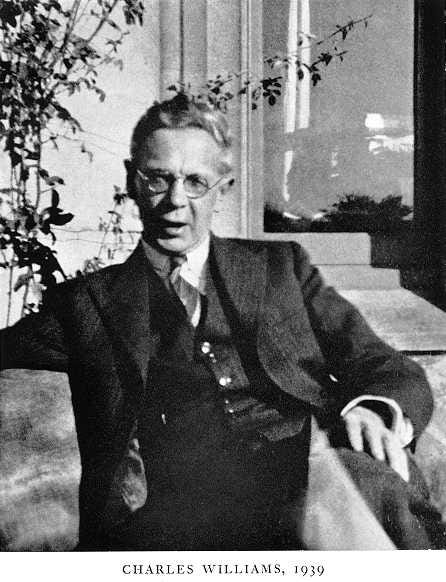
An Anglo-Catholic Mystic in Modern Garb
Williams' work is best understood as a form of sacramental realism. Drawing on sources like Dionysius the Areopagite, St. John of the Cross, and Christian Hermeticism, he fused traditional dogma with the mystical and the imaginative.
He was shaped by Anglo-Catholic theology—the belief that grace is mediated through tangible forms, that sacraments are signs that participate in what they signify, and that the Christian life is a pilgrimage toward deeper union with God. But he also wandered boldly into the realms of esotericism and spiritual warfare, seeing all as part of the spiritual cosmos governed by Christ the Logos.
Key Themes in Williams’ Esoteric Theology
Substituted Love (Co-Inherence)
At the heart of Williams' mystical vision is the Doctrine of Substitution, in which one soul voluntarily bears the burden of another. A deeply Christian, profoundly Eucharistic insight into how grace flows through human relationships. As Christ bore our sins, so we—mystically united to Him—may carry one another and bear each-others burdens.
“There are no self-contained souls,” Williams insists. “Love is the divine exchange.”
Ritual and Rosy Cross
Williams was affiliated with A.E. Waite’s Fellowship of the Rosy Cross, a Christian mystical society seeking spiritual regeneration through liturgical symbolism, prayer, and allegorical interpretation. Unlike occultists who divorced "magic" from God, Williams understood true ritual as a means of grace—a mirror of the liturgy of heaven.
In Williams' mythopoetic vision, the Holy Grail is both the Eucharistic chalice and the cup of spiritual transformation. In War in Heaven, the Grail is literally present in the mundane world—but it is a spiritual danger as much as a treasure. Only those purified by grace can bear its weight. It is the sacramental center of the universe. It is at once the chalice of the Last Supper and the vessel of transfiguration, a symbol that binds together suffering and sanctity, the visible and the invisible, the earthly liturgy and the celestial liturgy.
To drink from the Grail is to be changed.
Essential Novels of Mystical Vision
Descent into Hell
Perhaps his greatest work—an intense meditation on damnation, substitution, and the dangers of self-love. A doppelgänger haunts the streets of Battle Hill as spiritual realities unfold invisibly. The refusal of love becomes the first note of hell.
All Hallows’ Eve
A ghost wanders post-war London; a dark magician seeks to dominate souls; a saintly presence resists with quiet power. This novel explores the communion of saints, the afterlife, and the triumph of charity over necromancy.
Why Christians Should Read Williams
In his supernatural fiction, he offers a map of the mystical life, drawn from within the liturgical and sacramental worldview. His novels are not allegories, but spiritual initiations—invitations to see that:
The world is charged with the grandeur of God,
Love is hierarchical, self-emptying, and redemptive,
Evil is real but parasitic, undone by humility and the Holy Ghost.
If you’ve ever felt the draw of Arthurian legends, the mystery of the Eucharist, or the hidden depth of liturgy, Williams’ writings will call you deeper, further in.