
Origins of the Graal
Exploring Pre-Christian and Medieval conceptions of the Graal Legend

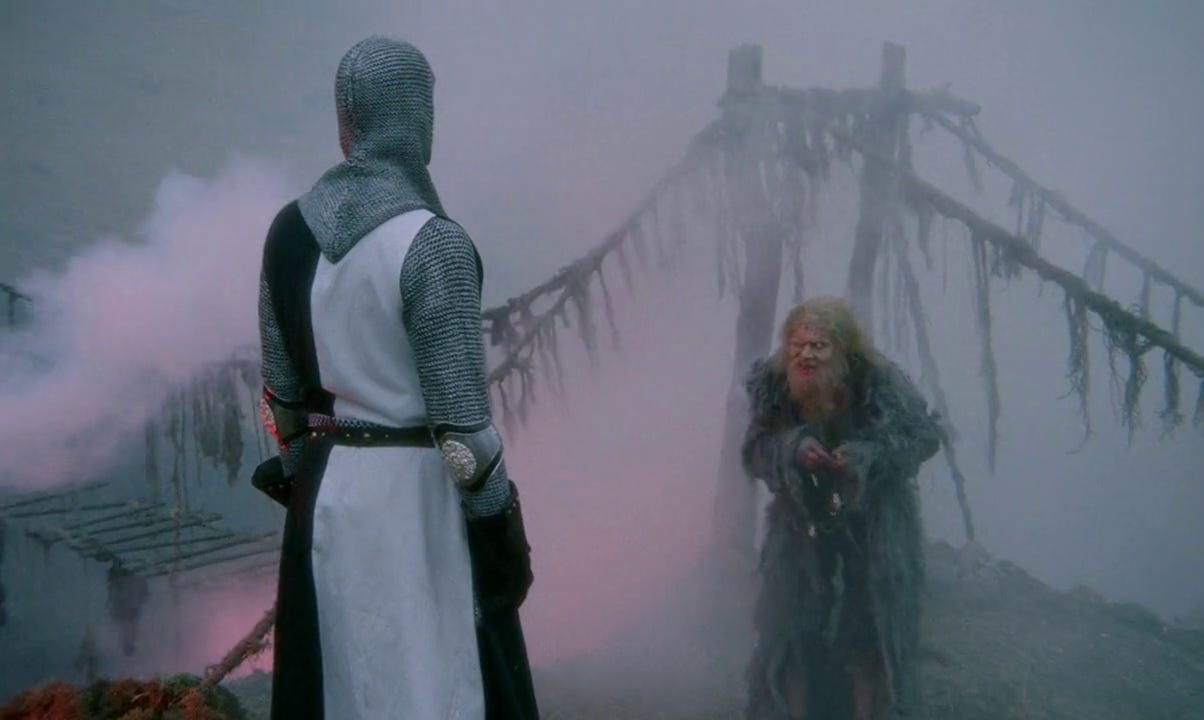
In the now cult classic Monty Python and the Holy Grail, the bridgekeeper famously asks each of King Authur’s knights a simple question.
“What is your quest?”
To which they are to reply,
“To seek the Holy Grail!”
Why Did Arthur want the Grail?
Monty Python’s take on the grail is somewhat arbitrary, God appears in the clouds and commands: “Arthur, King of the Britons... you and your knights must find... the Holy Grail.” And thus begins their quest.
Note: I’ll be using the spelling Graal going forward for the sake of capturing the old french spelling and connection to the medieval tradition.
The medieval Arthurian source material provides a more robust meaning behind the desire for the graal. There’s the history of the graal as the cup used by Christ at his Last Supper and also used to gather the drops of blood poured from the crucified Jesus.
And over the centuries an entire body of legends has developed as to what the Holy Graal could provide for the knight who takes hold of it. A few years back I was listening to a lecture related the Arthurian legend that explained one tradition was that the Holy Graal would grant eternal youth (although I was surprised to learn that eternal youth meant that one would perpetually be thirty-three years old). But the utility of the graal is not tied to one “power” but is seen as possessing a plethora of gifts including hidden wisdom, beatific vision, miraculous healing, immortality, and divinely-derived kingly authority.
Pre-Christian Grail Mythology
The Christian imagination can trace the symbols and rituals of the New Testament back through that of the Old Testament. And the “graal” symbol goes back to the earliest days of the covenant people. The Psalms speak of a symbolic cup of blessing that overflows with blessing. Historical figures like Joseph have a number of “cup” examples attached to them: think of the “cup-bearer’s dream” in Genesis 40 and the silver divination cup in Genesis 44 that is used to test his brothers.
Temple ritual included bronze ritual “basins” or large consecrated vessels that the priests used for washing prior to sacrificial rites. The poured out cup is often a picture of God’s wrath (Isaiah 51:17) as we see the cosmic picture of the earth as the “graal” or vessel that holds the sea (a hebrew picture of evil, chaos, sin, and the world.) We can read this back through the Bible with not just temple washings, but the divided sea that drowns Pharoah or the Flood of Noah pouring out over the dry land. Primordially, Genesis gives a picture of the cosmic order as the gathering up of the waters. Dry land serves to contain and set apart the sea. This “consecration” of cosmic cup of creation serves as the symbol read throughout the Biblical narrative.
It is also helpful to explore the intertestamental literature, especially the apocryphal and apocalyptic writings and to recover themes often overlooked by our modern church (which has too often reduced Christianity to a simple manual for “how to get to heaven.”) These texts fill in the narrative gaps with symbolic visions: the quest to restore the Temple, the pursuit of hidden wisdom of Enoch, and the longing for a coming Messianic King. Each of these motifs functions as a pre-Christian shadow and aligning closely with the symbolic figures of the Graal tradition.
It is not far-fetched to suggest that Genesis’s Joseph, shaped by Egyptian culture and shaping it in return, is one place where the concept of the graal begins to echo across the ancient world. His association with sacred cups, royal feasts, and hidden knowledge may have contributed, directly or symbolically, to the development or multiplication of sacred vessel imagery in ancient mystery religions. Or perhaps the truth is even more fundamental: that the very act of drinking is inseparably bound to the human longing for divine communion, just as bread in the Lord’s Prayer speaks to a hunger that is both physical and spiritual.
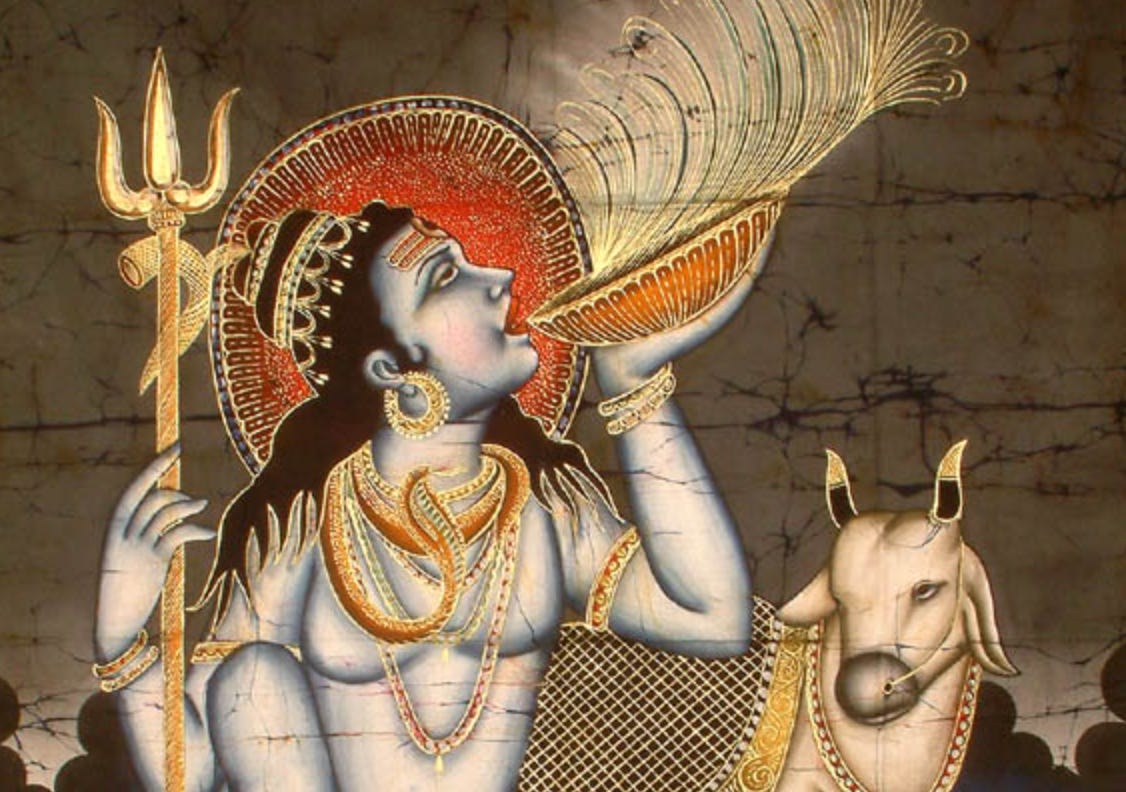
Consider also the “cauldron” motif of mythology often associated with witchcraft. It can be found (archaeologically and in literary texts) in Pre-Christian Celtic, Indo-European, and Near Eastern religious rituals. We also have Ambrosia and the Chalice of the Gods in Greek Myth and the Soma elixir in Aryan Vedic mythology, and so on.
The Everlasting Man
Chesterton in The Everlasting Man explains it this way:
“These are the myths and he who has no sympathy with myths has no sympathy with men. But he who has most sympathy with myths will most fully realize that they are not and never were a religion, in the sense that Christianity or even Islam is a religion. They satisfy some of the needs satisfied by a religion… it did satisfy, or rather it partially satisfied, a thing very deep in humanity indeed; the idea of surrendering something as the portion of the unknown powers; of pouring out wine upon the ground, of throwing a ring into the sea; in a word, of sacrifice...”
The pre-Christian myth is not the opposite of truth, but often a shadow or archetype of the coming Christian idea. The legendary connects ancient man to the God-man and the Scriptures anticipate a reconciliation of the symbolic and real world through the eternal logos: Christ Jesus.
The Graal stands as a symbol embraced by Christians to hold what theology proper, for all its systematic tomes, cannot contain: the mystery, the longing, and the glory of divine encounter.